
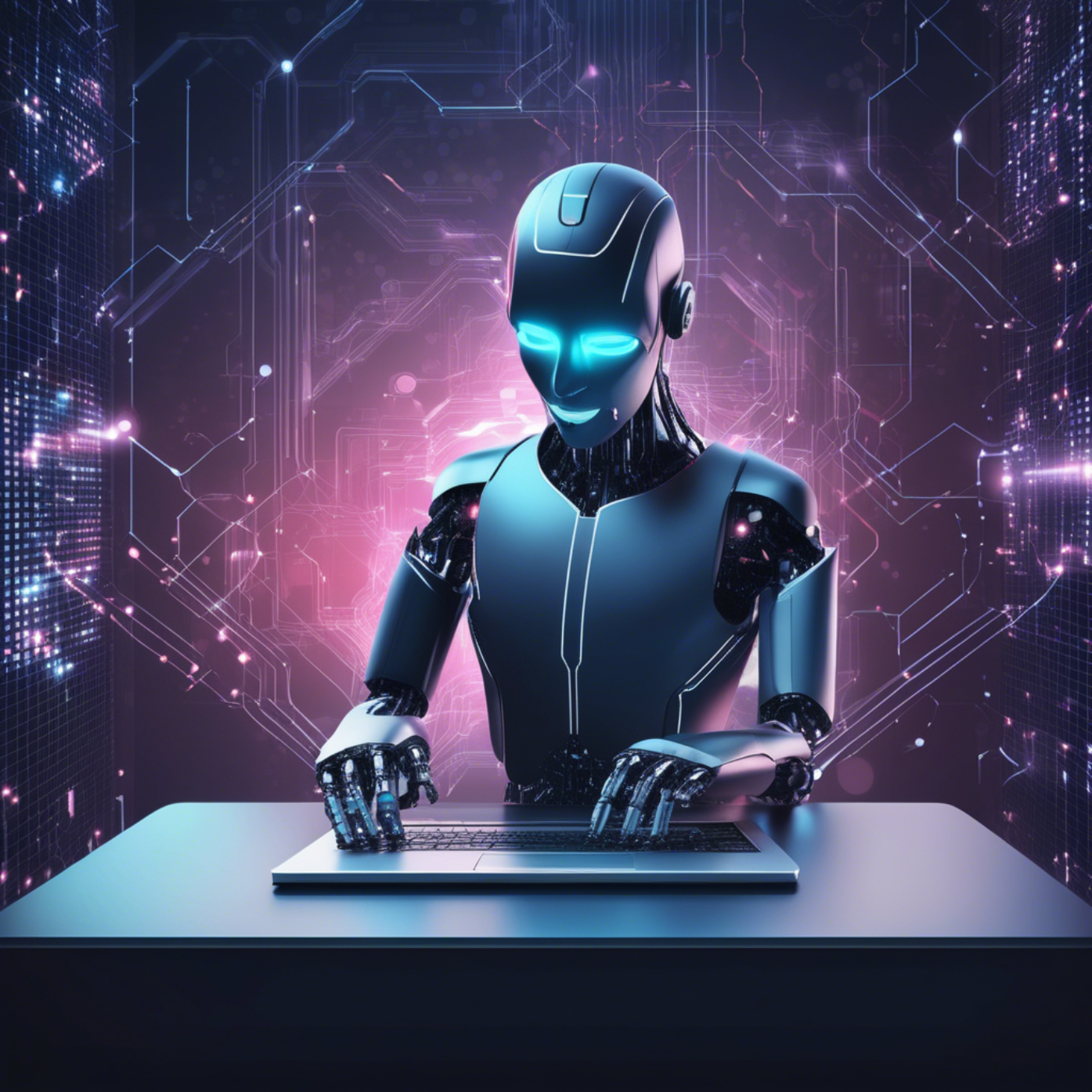
The rapid rise of artificial intelligence has redefined the future of software development. From predictive analytics to autonomous systems and natural language processing, AI has become the beating heart of innovation in nearly every industry. But behind every smart application is the intelligence of an AI programmer who engineers the logic, models, and algorithms that make such systems possible.
In recent years, AI programming has transitioned from a niche discipline into one of the most in-demand skill sets in tech. Organizations are investing heavily in AI infrastructure, and the demand for developers who can build and scale intelligent systems has skyrocketed. If you're looking to harness this shift, understanding the roles, tools, and potential of an AI programmer is essential.
The Evolving Role of an AI Programmer
Unlike traditional software developers, AI programmers work at the intersection of mathematics, data science, and computer science. They are tasked with designing machine learning models, training data pipelines, and integrating AI into real-world applications. The job often involves:
Data preprocessing and cleaning
Model development using frameworks like TensorFlow or PyTorch
Deploying AI models into production
Continuous optimization using real-time data feedback
AI programmers don't just write code—they build learning systems that improve over time. This shift in paradigm means they must think beyond simple logic structures and delve into probabilistic reasoning, statistical modeling, and ethical design.
Why Companies Are Investing in AI Programming
Businesses across industries—from healthcare to finance—are leveraging AI to gain a competitive edge. Here are a few reasons why:
Efficiency Gains: AI reduces human error and automates repetitive tasks, boosting productivity.
Improved Customer Experience: Chatbots and recommendation engines powered by AI enhance user interactions.
Data-Driven Decisions: Predictive analytics provides deeper insights for strategic planning.
Cost Reduction: Automated systems require less manual oversight and can run continuously.
To build these systems effectively, businesses need to hire an AI programmer who understands the nuances of both development and data science. Whether you're launching a new AI-driven product or looking to integrate machine learning into an existing system, working with a skilled AI developer is crucial.
Skills That Define a Great AI Programmer
While there are many paths into AI development, most top-tier professionals share a core set of skills:
Strong command of Python: Python’s vast library ecosystem makes it the go-to language for AI.
Understanding of mathematics: Linear algebra, calculus, and probability are fundamental for model building.
Experience with ML frameworks: Libraries like Scikit-learn, Keras, and TensorFlow are essential tools.
Familiarity with cloud services: AWS, Google Cloud, and Azure offer scalable environments for AI workloads.
Domain knowledge: Effective AI models require contextual understanding of the business problem.
As AI systems grow in complexity, programmers must also embrace continuous learning to stay relevant. New architectures, like transformers and diffusion models, are changing the game, and keeping pace is critical.
AI Programming Use Cases Across Industries
Here are some examples of how AI programmers are driving impact in various domains:
Healthcare: Predictive models for early disease detection and personalized treatment recommendations.
Retail: Inventory management systems that forecast demand and optimize logistics.
Finance: Fraud detection engines and algorithmic trading bots.
Education: Adaptive learning platforms that customize content based on student progress.
Agriculture: AI-powered drones that monitor crop health and automate harvesting.
These use cases highlight the versatility and transformative potential of AI when implemented by skilled programmers.
Common Challenges AI Programmers Face
Despite the promise, AI programming isn't without its hurdles:
Data Availability: Quality training data is hard to come by and often requires intensive cleaning.
Bias and Ethics: Models trained on flawed data can perpetuate social and algorithmic bias.
Model Interpretability: Explaining complex AI decisions to stakeholders is still a challenge.
Scalability: Moving from prototype to production at scale is non-trivial and resource-intensive.
Overcoming these challenges requires not only technical expertise but a strategic mindset—making the decision to hire an AI programmer a high-stakes investment for companies aiming to innovate responsibly.
AI Programming Trends to Watch
Looking ahead, several developments are poised to reshape the role of AI developers:
AI Code Assistants: Tools like GitHub Copilot are accelerating coding productivity and redefining developer workflows.
Low-Code AI Platforms: Democratizing AI development for non-technical users.
Edge AI: Pushing models to devices, reducing latency, and preserving data privacy.
Neuro-Symbolic Systems: Combining deep learning with logical reasoning for more powerful AI.
These trends suggest that the AI programming landscape will continue to evolve rapidly. Developers and businesses must stay ahead by adopting flexible tools and frameworks, while also nurturing ethical awareness and responsible AI design.
Conclusion
AI is more than just a trend—it’s a cornerstone of future innovation. As demand for intelligent applications grows, so does the need for skilled professionals who can bring them to life. Whether you’re a startup exploring AI possibilities or a large enterprise seeking advanced solutions, hiring the right AI programmer is the foundation for long-term success.
The right developer won’t just write code—they’ll architect intelligence.






Write a comment ...